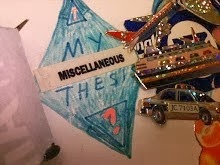
Here's an analogue review I wrote of a digital doc party I attended online yesterday courtesy of holyhela2k15 and the Digital Writers Festival. (Nuzzling into the wall behind it is a zine I made recently and have forgotten to mention here yet, R ' N ' BEING : THE CRYSTAL FILES) Click on the images to view the ends of the sentences.. :
Showing posts with label MYSTERY ACHIEVEMENTS. Show all posts
Sunday, February 16, 2014
Tuesday, January 31, 2012
RATS @ PLAY
Getting excited folks as the date of the rat game show leans backwards from the future towards us .... This passage is also out of The Book Of Symbols, Reflections on Archetypal Imagery (Taschen). From fire dragon Matt Dooley. Who has kindly agreed to lend me a third eye recording device (helmet cam) for the show.
PLAY
Who knows what makes us play? The young of very many species, including our own, spontaneously chase, leap, twist, wrestle and cavort, promoting strength and endurance, instinct, social bonding and adaptation. Complex play with objects and goals is associated with more complex brains. But playing is also, apparently, just for the sheer pleasure of play. An aquarium fish will repeatedly leap in and out of a tiny waterfall. Ravens have been observed sledding on their backs down slopes of snow, and kea parrots toss rocks in the air. Elephants kneel to equalize play with a smaller playmate (Brown, 2ff). Cats, dogs and primates, among others, incorporate objects and obstacles in their play and often have favourite toys. Dolphins invite play with human swimmers. Play, in fact, is a principal way in which acquaintance is made with another.
Human games are often formalizations of play, framed by fixed rules, while allowing for individual strategies. Many of our most familiar games can be traced back to archaic rituals and myths the cosmology of which is embodied in the structure of the contest. Hopscotch, for example, derives from myths of the soul's journey from earth to heaven through a labyrinth. Chess employs the hierarchy of medieval kingdoms. Games of chance are probably descended from divination rituals, and invoke the mythic forces of fate. In Hindu mythology, the spirit of lila or divine play, is behind the infinite manifestations of the gods and their maya, or power of illusion. "The divine mother is always sportive. This universe is her play ... her pleasure is in continuing the game." said Ramakrishna of the goddess Kali.
Artifacts of cultures thousands of years old reveal toy conveyances, miniature weapons, pull animals and human figures. Toys come alive through imagination and unconscious projection, reflecting in children the still-tenuous boundaries between inner and outer realities. Like the religious fetishes of antiquity, stuffed animals and dolls in particular reflect numinous facets of their possessors unknown identity. They embody threshold guardians in developmental transitions. They are potent objects of comfort and companionship, expressed affects, urges and compulsions, protection, aggression and role-playing.
Natural forces outside their ken made ancestors imagine they were themselves playthings of the gods. Contemporary computer-simulated games of sports, war, intergalactic conquest, evolution, urban planning and interactive doll-playing and the hands on making of models into a virtual experience in which enthusiasts play and are "played" by the unexpected components of the game. Psychologically, consciousness and unconscious interact and impact each other in all kinds of play. The reverie of play unveils feelings, aspirations, impressions, locked up pieces of experience and potentialities.Play can evoke the affinity and polarity between psychic opposites, and dynamics of exclusion and integration, separation and reunification. Alchemy described a part of the opus as "child's play" despite the arduous nature of the work of self-understanding. Jung played childrens games of drawing , modeling with clay and meditatio, the dialogue with an unseen partner, as a means of engaging the unconscious aspects of psyche and bringing its contents into consciousness. Dreams often utilize images of play. They reveal the stuff that supports or subverts our capacity for creative play. They illuminate a process related to contending in life, stepping up to the plate, going the distance, winning, losing, excelling. They invite play.
Lack of play, or abnormal play - sadistic, bullying, teasing play - is associated with abuse, abandonment, depression or sociopathy. Play is frivolous, serious, consequential. There are sexual games, political games, war games. Game theory mathematically describes the seemingly unpredictable convergence of competing parties. Physicists lay speculative "god-games" with giant particle colliders. Out of play emerges evolutionary change, self awareness, scientific discovery, artistic composition, invention, good friends of multiple species and the resolution of many questions. "The game's afoot," the legendary Sherlock Holmes would say when he had a lead to the mystery.
PLAY
Who knows what makes us play? The young of very many species, including our own, spontaneously chase, leap, twist, wrestle and cavort, promoting strength and endurance, instinct, social bonding and adaptation. Complex play with objects and goals is associated with more complex brains. But playing is also, apparently, just for the sheer pleasure of play. An aquarium fish will repeatedly leap in and out of a tiny waterfall. Ravens have been observed sledding on their backs down slopes of snow, and kea parrots toss rocks in the air. Elephants kneel to equalize play with a smaller playmate (Brown, 2ff). Cats, dogs and primates, among others, incorporate objects and obstacles in their play and often have favourite toys. Dolphins invite play with human swimmers. Play, in fact, is a principal way in which acquaintance is made with another.
Human games are often formalizations of play, framed by fixed rules, while allowing for individual strategies. Many of our most familiar games can be traced back to archaic rituals and myths the cosmology of which is embodied in the structure of the contest. Hopscotch, for example, derives from myths of the soul's journey from earth to heaven through a labyrinth. Chess employs the hierarchy of medieval kingdoms. Games of chance are probably descended from divination rituals, and invoke the mythic forces of fate. In Hindu mythology, the spirit of lila or divine play, is behind the infinite manifestations of the gods and their maya, or power of illusion. "The divine mother is always sportive. This universe is her play ... her pleasure is in continuing the game." said Ramakrishna of the goddess Kali.
Artifacts of cultures thousands of years old reveal toy conveyances, miniature weapons, pull animals and human figures. Toys come alive through imagination and unconscious projection, reflecting in children the still-tenuous boundaries between inner and outer realities. Like the religious fetishes of antiquity, stuffed animals and dolls in particular reflect numinous facets of their possessors unknown identity. They embody threshold guardians in developmental transitions. They are potent objects of comfort and companionship, expressed affects, urges and compulsions, protection, aggression and role-playing.
Natural forces outside their ken made ancestors imagine they were themselves playthings of the gods. Contemporary computer-simulated games of sports, war, intergalactic conquest, evolution, urban planning and interactive doll-playing and the hands on making of models into a virtual experience in which enthusiasts play and are "played" by the unexpected components of the game. Psychologically, consciousness and unconscious interact and impact each other in all kinds of play. The reverie of play unveils feelings, aspirations, impressions, locked up pieces of experience and potentialities.Play can evoke the affinity and polarity between psychic opposites, and dynamics of exclusion and integration, separation and reunification. Alchemy described a part of the opus as "child's play" despite the arduous nature of the work of self-understanding. Jung played childrens games of drawing , modeling with clay and meditatio, the dialogue with an unseen partner, as a means of engaging the unconscious aspects of psyche and bringing its contents into consciousness. Dreams often utilize images of play. They reveal the stuff that supports or subverts our capacity for creative play. They illuminate a process related to contending in life, stepping up to the plate, going the distance, winning, losing, excelling. They invite play.
Lack of play, or abnormal play - sadistic, bullying, teasing play - is associated with abuse, abandonment, depression or sociopathy. Play is frivolous, serious, consequential. There are sexual games, political games, war games. Game theory mathematically describes the seemingly unpredictable convergence of competing parties. Physicists lay speculative "god-games" with giant particle colliders. Out of play emerges evolutionary change, self awareness, scientific discovery, artistic composition, invention, good friends of multiple species and the resolution of many questions. "The game's afoot," the legendary Sherlock Holmes would say when he had a lead to the mystery.
Sunday, November 27, 2011
TASTES OF IRONY

My supervisor
In my art practise I do a lot of pretending. Not deceitful pretending to purposely pull the wool over anyones eyes. Just very vivid imaginative pretending that is actually really real from my perspective even if it may not be from an outside perspective yet. Pretending is a good tool for planting ideas from your inner fountain in the soil of reality. If you never stop doing it there's a pretty good chance it's realness will come into fruition in the mind of others and all of a sudden it's not pretending anymore. I'm pretending to do a thesis at the moment. That means I actually am doing one I guess. Just not through official channels. (Pictured is my supervisor.)
I found this passage about pretending in The Art of Living : Socratic Reflections from Plato to Foucault by Alexander Nehamas :
Cicero himself, for example, does not separate irony from indirectness. He thinks, of course, of irony in positive terms. But he writes that "of the Greeks, we are told that a pleasant and humorous and genial conversationalist, who put up a pretence whenever he spoke, was Socrates (the Greeks called him an eiron), "his reference to pretending (simulare) leaves the question of transparency open. One might object, as Vlastos does, that "pretense" does not have its "basic use" of "deceiving" or "alleging falsely". Instead "pretending" must be understood in its "subsidiary use" as it is applied for example to "children 'pretending' that their colored chips are money ... or that their dolls are sick or die or go to school." This "subsidiary" use "altogether innocent of intentional deceit," allows us to understand eironeia as a figure of speech totally devoid of "willful misrepresentation" (27).
But many activities that go under the name of "pretending" cannot be reduced to either of these two starkly defined opposites. The children who pretend that some colored chips are money may not intend to deceive anyone by their pretense, but that does not mean that to them the chips are clearly not money either: children have a much more complex relation to toys than the dichotomy between the primary and the subsidiary use of "pretending" can possibly capture. To take another sort of case, I may pretend to be - I may act like - a classical scholar, all the while leaving my audience (and perhaps myself as well) in doubt as to whether I am one or not. To call someone a pretender, a simulator (as Cicero calls Socrates) shows neither that we know their mind nor even that they know it themselves.
Subscribe to:
Posts (Atom)